
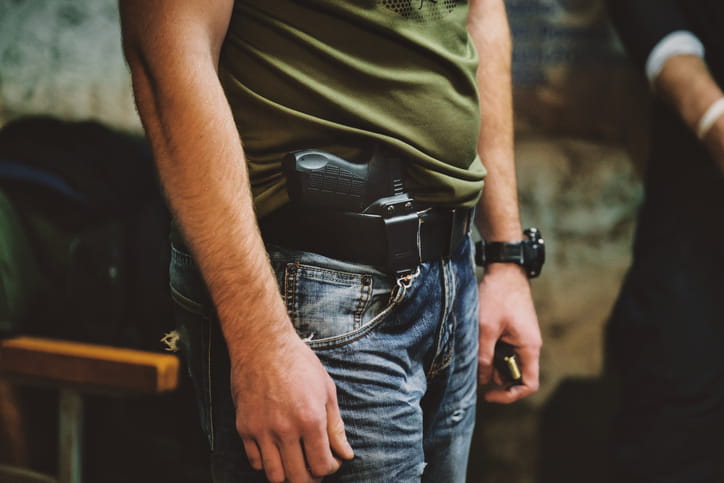
How Often Should You Re-Train? Renewal and Continuing Education for CCW Permit in New Jersey
According to the New Jersey State Police, if you do your training and live qualification, known as the SP182 certificate, you can use it for your initial renewal application and only one following renewal as long as your permit never expires. After that, you need to re-train. New Jersey’s Permit to Carry renewal requires a requalification by a certified instructor. Otherwise, your permit will be invalidated under N.J.S.A 2C:58-4(g).
Wondering how often you should re-train for your continuing education for a CCW permit in New Jersey? The short answer is biennially. Scheduling your Lakewood, NJ, CCW class early is the best way to avoid interruptions to your right to lawfully carry. A lapse in your permit can create serious legal risk.
Due for your CCW requalification in New Jersey? Sign up for your class at WESHOOT.
Why Re-Training Matters for NJ CCW Holders
Failing to requalify by December of the year your permit expires means it will become invalid. If you want to obtain a Permit to Carry after that, you will need to apply as a new applicant. That means retaking your Civilian Carry Assessment and Range Evaluation (CCARE) course and submitting updated fingerprints.
CCARE is required, according to the Lower Township Police Department. The protocol must also be administered by a certified instructor. A common misconception is that CCARE is a simple educational and training class. While you will receive valuable information during the course, the live-fire portion is a pass/fail evaluation. The instructors are not there to teach you how to shoot a handgun.
During the classroom component, your instructor will review:
- New Jersey’s use-of-force laws.
- Safe handling.
- Your rights and responsibilities.
- Drawing, aiming, and firing principles.
When you head out to the range, you will have an opportunity to draw an unloaded weapon. The instructors will be evaluating your technique for safety and proficiency. Finally, you will get on the firing line and engage in live fire. Here’s what to expect during CCARE:
- 10 five-round volleys of fire.
- Two volleys of fire from each distance, which includes 3, 5, 7, 10, and 15 yards.
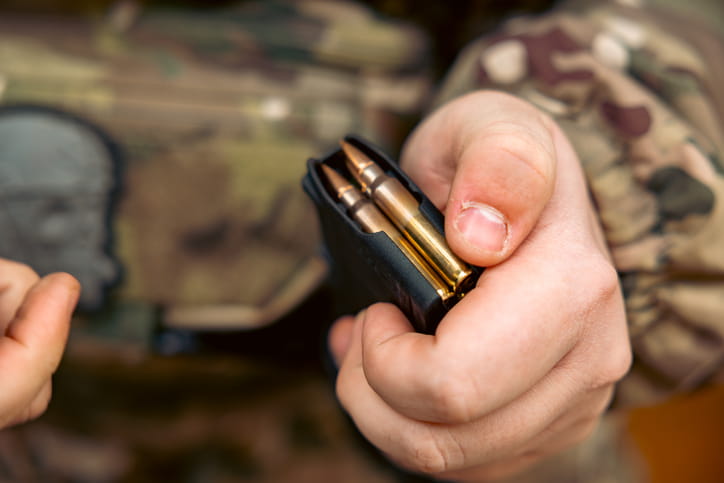
- At least one magazine change
- 50 total rounds fired.
- 80% (40 hits) minimum required to pass.
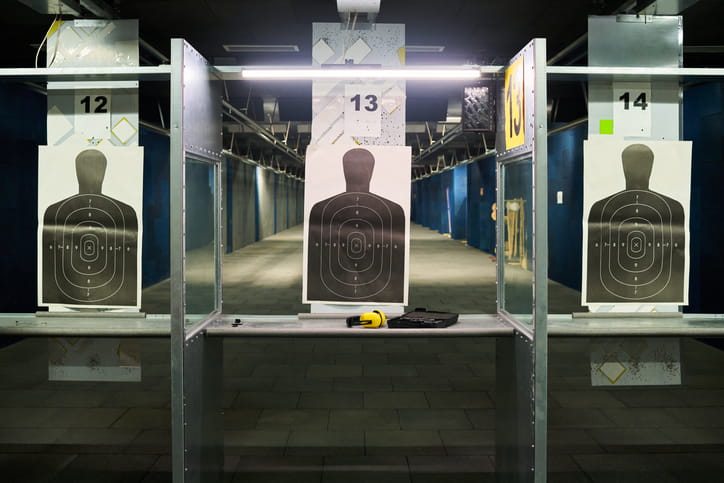
- Use of an FBI Q-style silhouette target.
The course is not timed. However, you must follow the instructor’s directions during the entire course. They will tell you when to draw, fire, and holster. Take your time and focus on accurate shot placement.
CCW Renewal Timeline in New Jersey
New Jersey requires you to renew your Permit to Carry every two years. You can begin the renewal process up to four months before the expiration date on your permit.
Here’s how it works:
- Submit your renewal application to the NJ State Police online portal or in-person to your local police department.
- Pay the $200 fee.
- Provide four references who have known you for at least three years.
- Consent to a mental health records review.
Typically, renewals are processed in about 6 – 12 weeks, which is why PTC holders are encouraged to apply as early as possible. Some applicants get their renewal approved in as little as one to two weeks. However, that’s the exception, not the norm. Do not wait until a few weeks before your permit expires. If it lapses, you are not legally allowed to carry a concealed firearm until you receive a valid permit.
If your renewal or original application is denied, you have 30 days to file an appeal with the Superior Court. Getting a denial overturned can be challenging. Be prepared to provide thorough documentation. You may need the assistance of a firearm attorney due to the complexity of the process.
What You Need To Renew Your Concealed Carry Permit in NJ
Here’s a breakdown of New Jersey concealed carry renewal requirements:
- Firearms ID card
- SBI number
- NJ driver’s license
- SP182 training certificate, which must have been completed in the previous two years
You must submit all of these documents to the New Jersey State Police via their online portal or to your municipal police department.
The range evaluation is just that. The instructors will closely observe your conduct and proficiency while on the range to ensure you can handle your weapon safely. They are watching for:
- Safe loading and unloading
- Drawing proficiency
- Shooting accuracy
- Overall competency
If you do not pass the CCARE protocol, you will have to retake the entire course. There is no partial credit.
If you do not have prior firearms experience, consider taking private lessons before your CCARE evaluation. A lesson from a skilled instructor can help set you up for success. Additionally, you’ll learn valuable skills that will prepare you to exercise your Second Amendment Rights.
Requalification Requirements: Live Fire and Classroom Components
The requalification course includes both the classroom and live fire components. The classroom portion will cover the same information you received during your initial application, as well as any relevant legal updates. New Jersey has some of the strictest gun laws in the nation, so pay close attention while in the classroom. It’s vital to know what you are allowed and not allowed to do with a PTC.
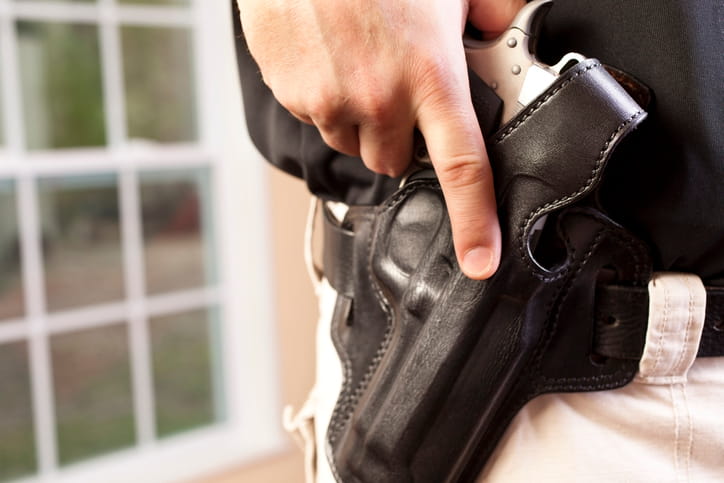
Prior to starting the course, the instructor will inspect your holster and firearm. Your holster must meet statutory requirements for design and retention ability. If your holster does not meet the minimum requirements, you will not be allowed to participate in the class.
Before signing up, make sure you are enrolling in a New Jersey-approved class. There are similar courses to CCARE that do not qualify. For example, if a class does not use a CCARE-approved target or involves a different course of fire, it will not meet renewal requirements. Taking the wrong course could be a waste of money and lead to delays in renewal application processing.
The live-fire CCARE evaluation includes 50 rounds at an FBI Q-style silhouette, but more on that below.
Shooting Test Specifics for CCW Renewal
The CCARE protocol can be intimidating, even if you passed it during your initial application process. Breaking it down into small parts can help you mentally prepare. You will need to pass the evaluation with each handgun you intend to carry, but you only need one PTC permit.
The most notable component of the course involves firing from different distances, which include:
- 3 yards
- 5 yards
- 7 yards
- 10 yards
- 15 yards
You will fire two volleys of five rounds at each distance, for a course total of 50 rounds. You must land at least 40 hits to achieve a minimum passing score of 80%. This shooting qual is done with a FBI Q-Target, where the silhouette resembles a bottle. A hit must be inside the bottle-shaped to count as a hit.
While you can submit your renewal application online, there are no virtual options for the CCARE evaluation due to the live-fire component. You must attend in person at a gun range, like WESHOOT’s Lakewood facilities.
Does CCW Training Expire? Key Facts
The initial firearms training course does not expire, per se. However, New Jersey wants shooters to complete the course within two years of an initial Permit to Carry application. The same requirements apply when renewing your PTC. If you time it right, you can use your initial CCARE certificate for your first renewal, too.
You will need to complete a new CCARE course for subsequent renewals. There are limited exceptions where the NJSP may accept other substantially similar course certificates. However, it’s best to take a standardized New Jersey course so you can avoid delays in your renewal process.
The New Jersey State Police verifies that you successfully completed the course before moving on to other aspects of the renewal application process.
If you have an out-of-state permit and are moving to New Jersey, know that the state does not honor any other PTCs from other jurisdictions. You will need to apply for and obtain an NJ PTC before you are allowed to lawfully carry a concealed firearm in the state.
Common Questions on NJ CCW Renewal
Let’s unpack some common questions you may have about NJ CCW renewal.
What Are the Requirements for CCW Training in NJ?
To obtain a Permit to Carry a handgun in New Jersey, you must complete state-mandated firearms training and demonstrate that you have thorough familiarity with safe handgun handling and use.
The course includes classroom instruction on:
- Firearm safety
- Lawful use of force
- State laws & best practice
You will also complete a live-fire qualification on a range administered by a certified instructor. The protocol will follow the CCARE format, which is a pass/fail evaluation of your proficiency and accuracy. If you do not meet the minimum accuracy requirements or make egregious safety errors, you will have to retake the course. Make sure you adequately prepare by training prior to enrolling in the course.
After passing the course, you will receive a certification that includes the date and your instructor’s credentials. You must submit the certificate as part of your initial or renewal application. The certificate must be dated within two years to satisfy the training requirement.
How Much Is a Permit To Carry in NJ?
A Permit to Carry a handgun costs $200. That includes an initial application fee of $50 and additional fees of $150. You may also be charged a surcharge or transaction fee, especially when paying by debit or credit card. Some jurisdictions may charge additional background or service fees.
Fees are non-refundable, even if your permit is denied. Ensure you meet all eligibility requirements before applying.
Your fee does not include the costs of training. You will also need a separate handgun purchase permit and Firearms Purchaser Identification Card. That means paying additional fees. Plan to spend anywhere from $350 to $500 on permitting, training, and licensing requirements in the State of New Jersey.
Learn how to buy a gun in New Jersey with WESHOOT.
Can You Conceal Carry in New Jersey?
You can carry a concealed firearm in New Jersey if you obtain a Permit to Carry. Carrying a concealed pistol without a permit is a felony offense that can result in prison time, hefty fines, or both.
New Jersey does not honor out-of-state concealed carry permits. Out-of-state permit holders are not guaranteed leniency in criminal court if they are caught violating New Jersey law.
Even if you have a PTC, there are restrictions that you need to be aware of. Make sure that you know when and where you are allowed to carry your firearm with a PTC.
Where Are You Allowed To Carry Guns in NJ?
A concealed carry permit in New Jersey allows you to carry in most public places. However, you are prohibited from carrying your firearm in designated sensitive places, including, but not limited to:
- Schools
- Government buildings
- Courthouses
- Health care facilities
- Bars or places where alcohol is served
- Casinos
- Parks
- Beaches
- Dispensaries
- Other areas where state law or local ordinances bar guns
Private property owners can also prohibit people from carrying a concealed firearm on the premises.
What Are the Requirements for the Concealed Carry Test in NJ?
The concealed carry test follows the CCARE protocol. You must complete a live-fire qualification using the handgun you intend to carry. You’ll need to fire at least 50 rounds from five different distances. You must also achieve a minimum score of 80%.
During the evaluation, the instructor will evaluate your ability to safely load, unload, holster, draw, and handle the firearm. If they have major safety concerns, they can fail you, even if you meet score requirements.
Advanced Tips: Stay Compliant Beyond Renewal
Transporting your firearm is one of the most important aspects of gun ownership in New Jersey. Typically, you have to transport it unloaded in a locked container, such as your trunk or a gun case. The case must be locked, and ammunition needs to be stored separately.
As a PTC holder, you can carry a loaded firearm on your person or immediately within reach within your vehicle. However, you must notify law enforcement officers that you are carrying a concealed firearm if you come into contact with them, such as during a traffic stop.
New Jersey is also notorious for its red flag laws, which are designed to protect the community from gun violence. If family members or friends file a petition with the court that someone is unfit to possess a firearm, that person could have their weapons temporarily or permanently seized.
Use your resources to stay apprised of the latest legal updates in New Jersey. The Attorney General’s website and the National Rifle Association are excellent sources of accurate, timely information. You may even want to subscribe to newsletters from these organizations so that you don’t miss out on important news.
If you are in the Lakewood area, consult with your local police department. They can answer common questions to help you lawfully exercise your Second Amendment Rights.
Next Steps: Book Your Lakewood CCW Requalification Class
Now that you know how to renew CCW permit in NJ, it’s time to book a class. Booking a course with experienced Lakewood instructors can help you:
- Avoid criminal offenses due to a lack of knowledge.
- Maintain your right to legally carry a handgun.
- Sharpen your skills.
Remember, you can start your renewal up to four months early. Don’t wait.
Sign up for your renewal class with WESHOOT today! Contact us to get started.
FAQ
Do I Need To Resubmit Fingerprints for NJ CCW Renewal?
No, NJSP already has your fingerprints on file from your initial application.
How Long Does NJ CCW Renewal Processing Take?
Most applications are processed in 6 – 12 weeks. However, your renewal application may be completed sooner if you submit it using the online portal and submit all documents at the time of submission. Processing time will vary based on the number of applications the NJSP receives and several other factors.
Can I Renew My NJ Concealed Carry Permit Online?
Yes, you can renew online using the New Jersey State Police portal.
What if My NJ CCW Training Record Gets Rejected?
If your training record gets rejected, it is likely expired or not from an approved instructor. Therefore, you will need to take an approved CCARE course.